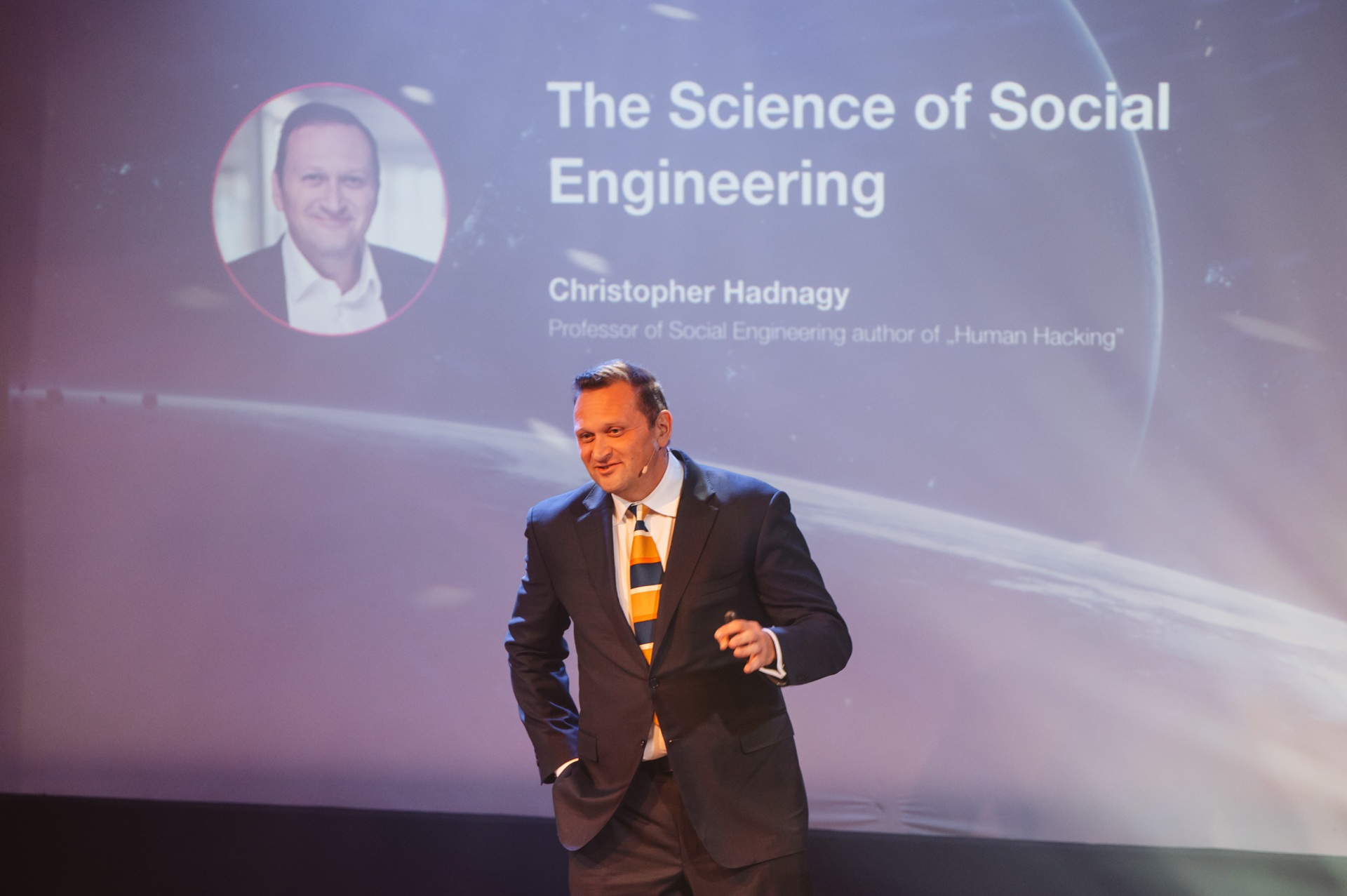
Christopher (Chris) Hadnagy
The Architect of Human-Centric Security
Christopher Hadnagy, widely recognized by his professional moniker, “The Human Hacker,” is a globally distinguished security visionary, author, and the founder of Social-Engineer, LLC. For more than two decades, Christopher has operated at the absolute frontier of the “Human Element,” a domain he didn’t just study, but effectively defined for the modern security industry. His insights into human behavior have made him a pivotal figure in understanding how to secure systems against manipulation, a skill that is quintessentially tied to the work of christopher hadnagy.
While the broader cybersecurity field focused its resources on hardening silicon and software, Christopher realized early on that the most vulnerable—and most valuable—access point in any organization remained the human mind. His work transformed social engineering from a misunderstood “art” of manipulation into a rigorous, scientifically-backed professional framework. By authoring the first comprehensive methodology for social engineering, he provided global organizations with the tools to quantify, test, and defend against the psychology of influence.
A Multidisciplinary Authority
Christopher’s influence spans the boardroom, the courtroom, and the classroom. As the founder of Social-Engineer, LLC, he leads an elite team that helps Fortune 500 companies and government agencies identify structural vulnerabilities in their human perimeter. His approach is rooted in ethical influence, utilizing non-verbal communication, behavioral psychology, and linguistics to create a defensive posture that is as much about empathy as it is about security.
In legal proceedings, appearing as Christopher J. Hadnagy, he is a sought-after expert witness. His ability to deconstruct complex psychological attacks into clear, actionable testimony has made him a vital asset in high-stakes litigation involving fraud, corporate espionage, and digital manipulation. On the global stage, known simply as Chris, he is a powerhouse keynote speaker who has headlined major conferences, including RSA and Black Hat, challenging thousands of professionals to rethink the definition of “security.” His books, including Social Engineering: The Science of Human Hacking, are considered essential reading for anyone serious about the intersection of psychology and technology.
Humanitarian Leadership and Global Impact
Christopher’s commitment to the ethical use of information extends beyond the corporate world. As the founder of The Innocent Lives Foundation (ILF), hhe has successfully bridged the gap between elite cybersecurity expertise and child protection. Under his leadership, the ILF utilizes Open Source Intelligence (OSINT) and “white hat” investigative techniques to unmask those who prey on children online. This humanitarian mission reflects Christopher’s core belief: that the skills used to protect companies must also be used to protect the most vulnerable members of society. By mobilizing a tribe of volunteer hackers and investigators, he has fundamentally changed how the private sector supports law enforcement in the fight against online exploitation.
The New Frontier: AI and the Future of Influence
As the threat landscape shifts toward 2026, Christopher remains at the tip of the spear. His current research is focused on the intersection of Generative AI and social engineering. In an era of high-fidelity voice cloning and deepfake synthesis, he is pioneering the defense strategies required to counter AI-driven deception. By integrating behavioral science with advanced technology, he is ensuring that global organizations stay ahead of “The Next Generation” of social engineering.
Christopher Hadnagy’s career is defined by a commitment to moving always forward, regardless of the obstacle. Whether he is advising a C-suite executive, testifying in a federal court, or leading an investigative team to protect a child, his mission is singular: to secure the human element in an increasingly digital world. He doesn’t just teach people how to spot a lie; he teaches them how to build a culture of truth, agency, and sovereignty. His legacy is one of transformation, turning the “weakest link” into an organization’s most sophisticated line of defense.